The story of a survivor
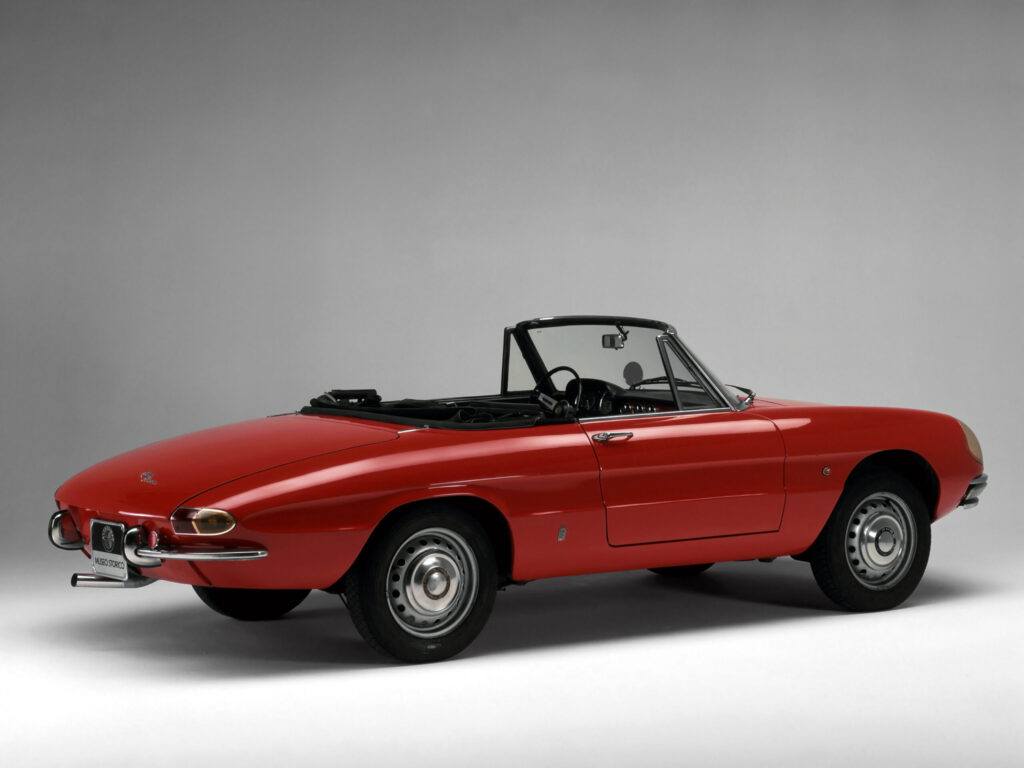
1969 Alfa Romeo 1750 Spider AR1480883
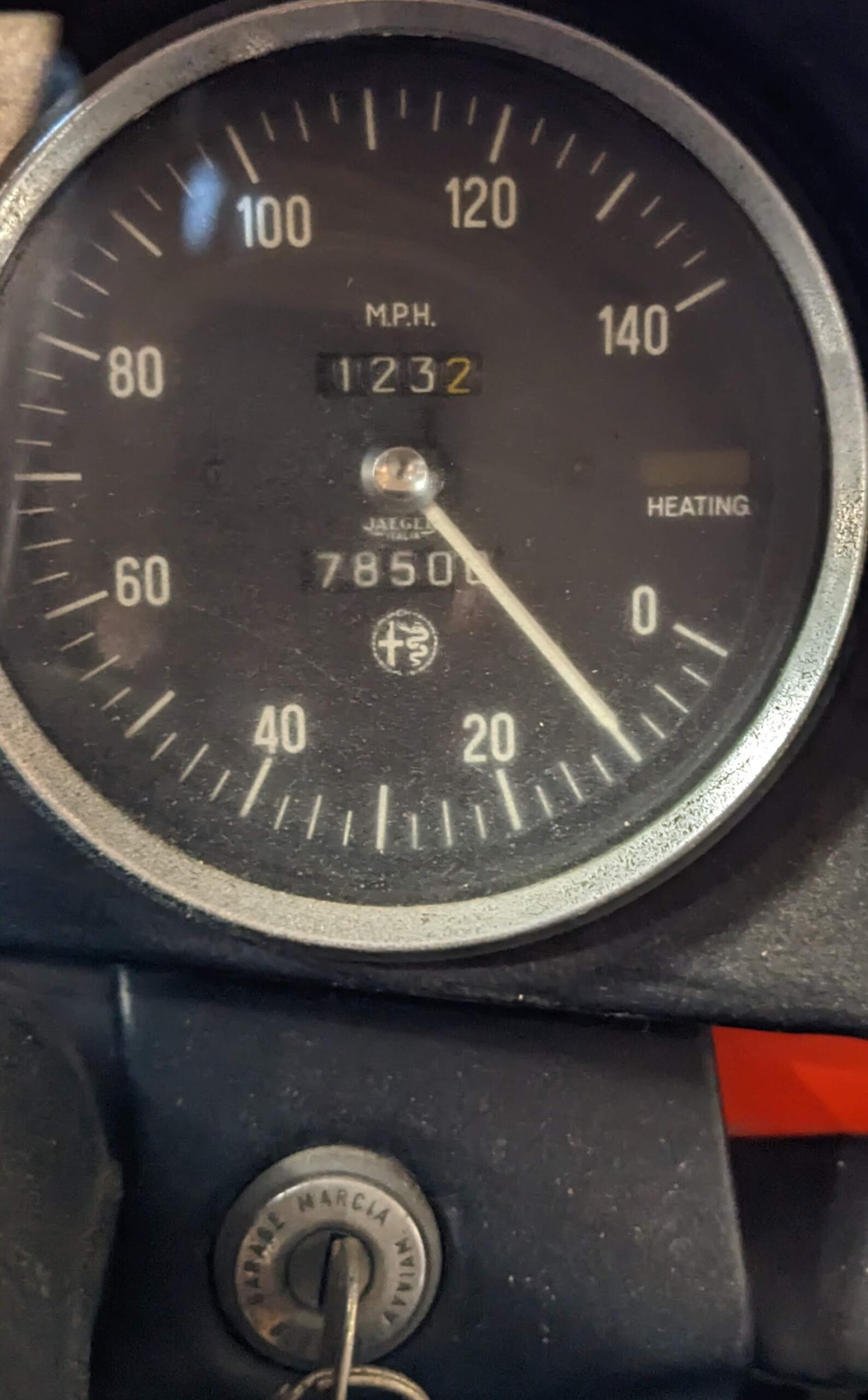
US-Spec LHD Spica 78,500 miles
55 years old and counting, 34 years in my custody…

Story in words and pics
1969
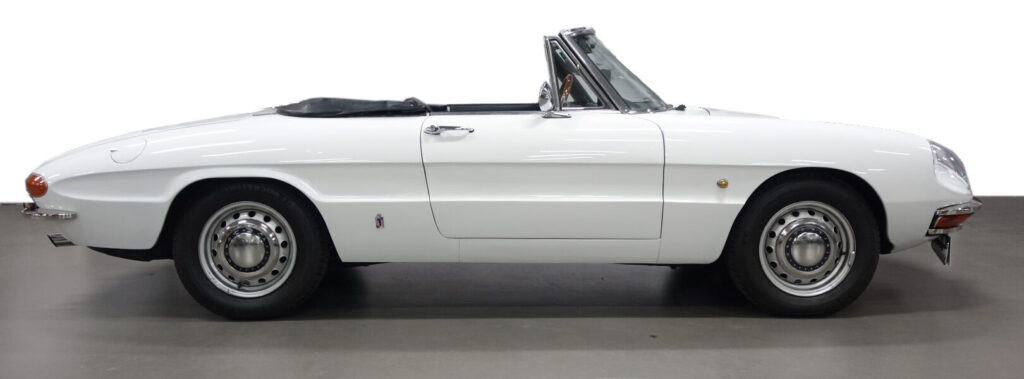
1969: Brand new car, colour white, sold by Gaston Andre West, the Alfa Dealer in Framingham Massachusetts, to Gail Bryan, an international photographer. In 1978, after returning from 4 months in Nepal, Gail was distracted and she allowed the car to run out of oil. The engine was rebuilt by the dealer. Then in 1980, having just come back from Italy, she was stopped at a light when a car rear-ended her, causing injury. She kept the damaged car for a year, but a bit spooked, finally sold it to Carl and Fay Bolivar (both now deceased). Carl was President of the New England Alfa Club, a very active group of enthusiasts.
As a footnote, when I spoke to Gail in 1992, she said if I ever decided to sell the car, she would like to buy it back, but no response when last I wrote her – she would be 83 now, but internet suggests she is still alive.
1980
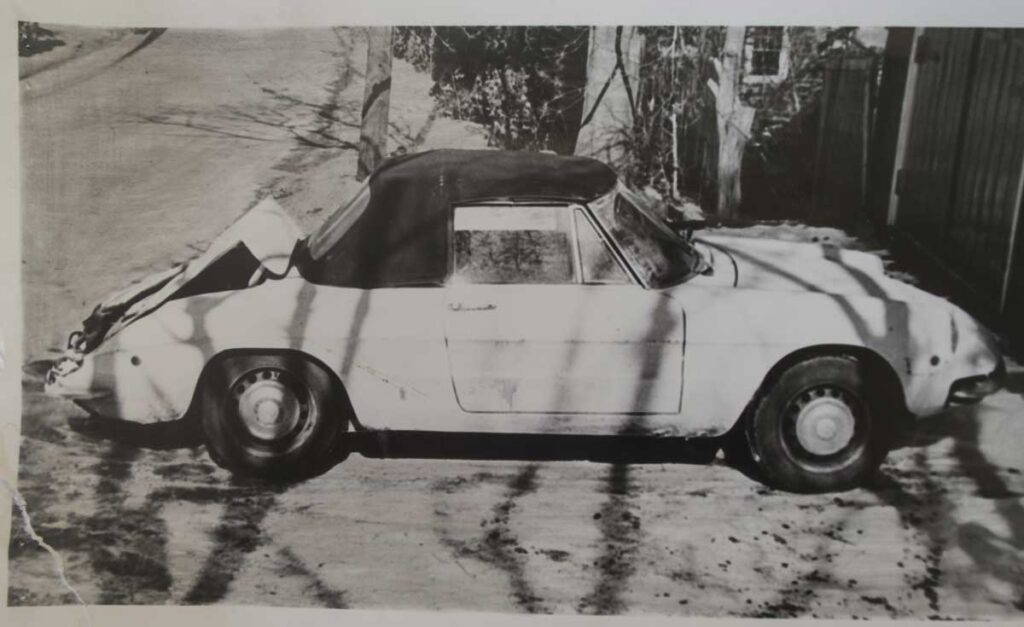
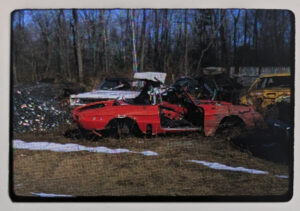
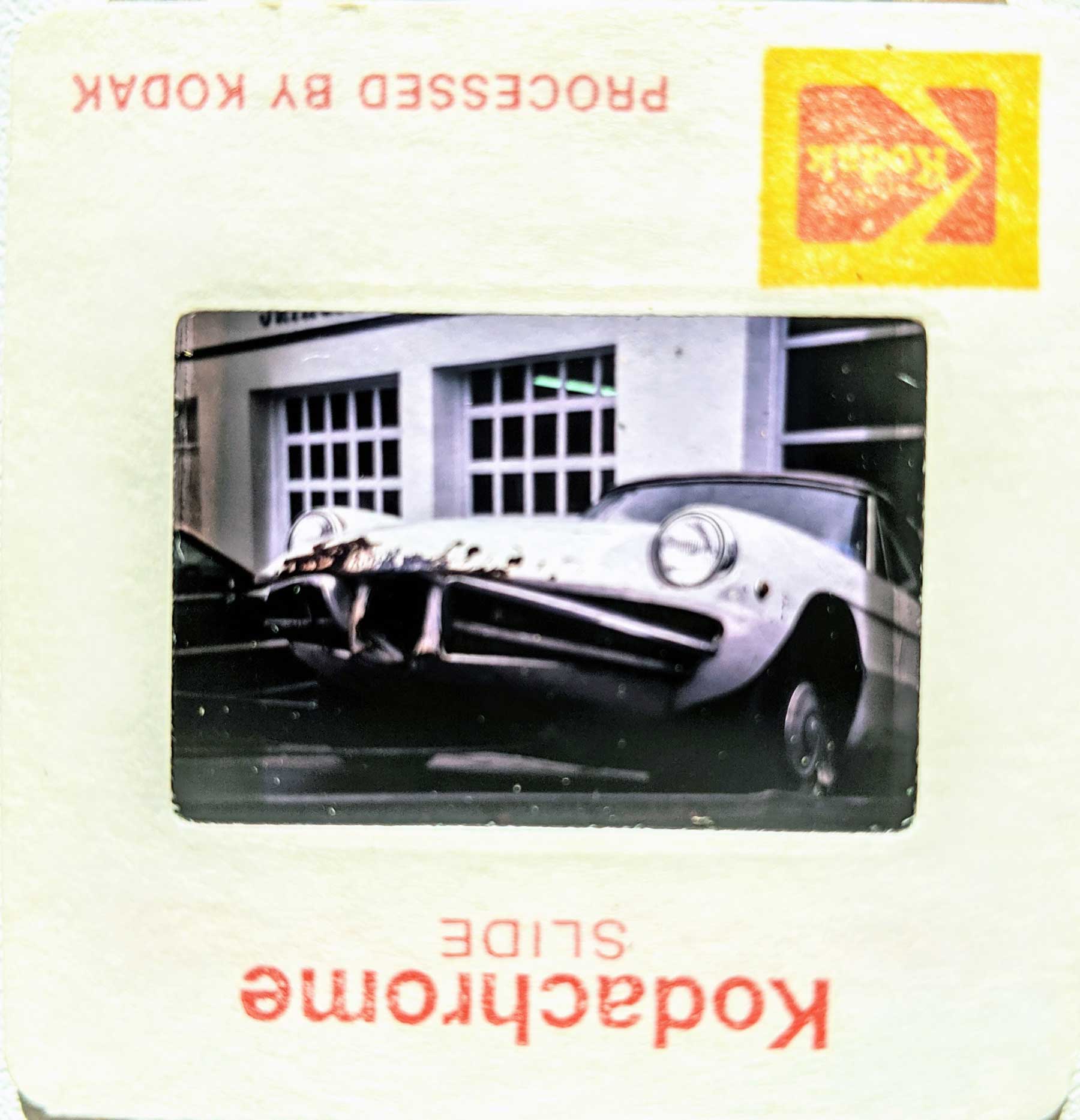
Rear-ended at 30 mph, shunted into car in front. Photos provided by the late Faye Bolivar. She also gave me some slides from her showing the red donor car.


1981
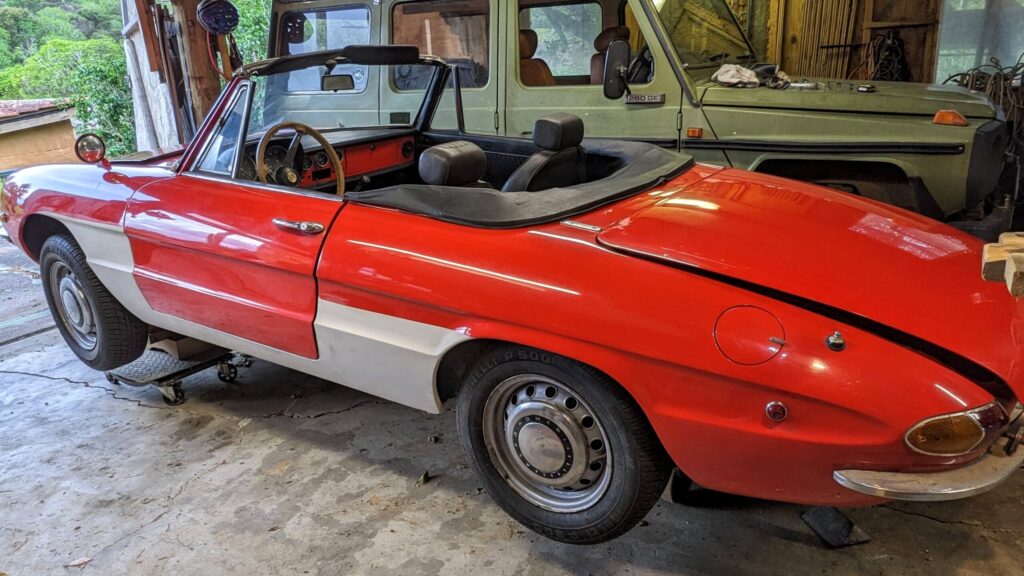
1981 Carl Bolivar undertook a complete what Faye described as a careful and faithful restoration of the car. Rather than repair the rear, they replaced the boot (trunk) and guards (fenders) with undamaged parts from a red 69 Alfa Spider. The restored car was painted in a lavender silver colour called “purple haze”. Faye and Carl used the Spider for autocross and rallies.
1985, after Carl died, Faye carefully vetted prospective buyers and sold the car with 59,403 miles on it. The next buyer (D.H.) was a caretaker from 1985-1988.
1988 D.H. sold the car with 70,171 miles to S.B. the 4th buyer in 1988 who kept it for a year.
1990
1990: By the time I saw the car advertised in Hemmings and drove up to Boxboro to take a look, it was a bit tired, but it showed that someone previously had taken care of it. I bought it on the spot, left my 1979 Spider on the road and drove the 69 home. Even though the engine was smaller than the 1979 2000 Spider, it was far more responsive, a much more fun car to drive… the last pure Alfa before US regulators brought about detuning of European sports cars.
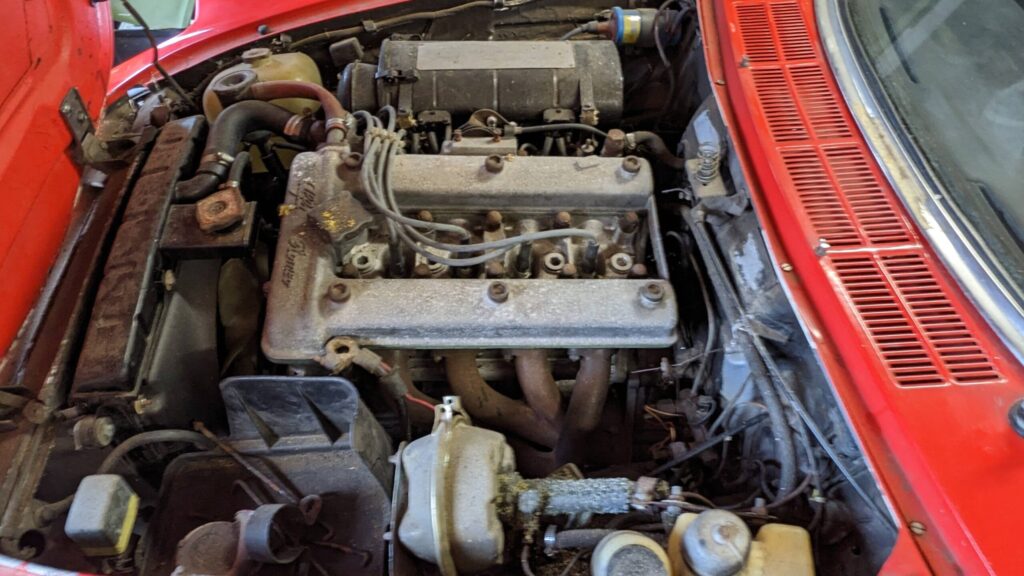
Reportedly, the Italians were so worried about the new US pollution rules that they took the mechanical fuel injection developed for the Type 33 racing prototype (read the story here). By the 1990’s Alfa owners were removing the Spica and replacing it with Webers, but as I owned both a Euro Spec 1750 Spider with Webers and the 1750 Spica, and found in every way the US spec was far superior. So instead replacing the Spica, I eventually sent it to Wes Ingram for reconditioning.
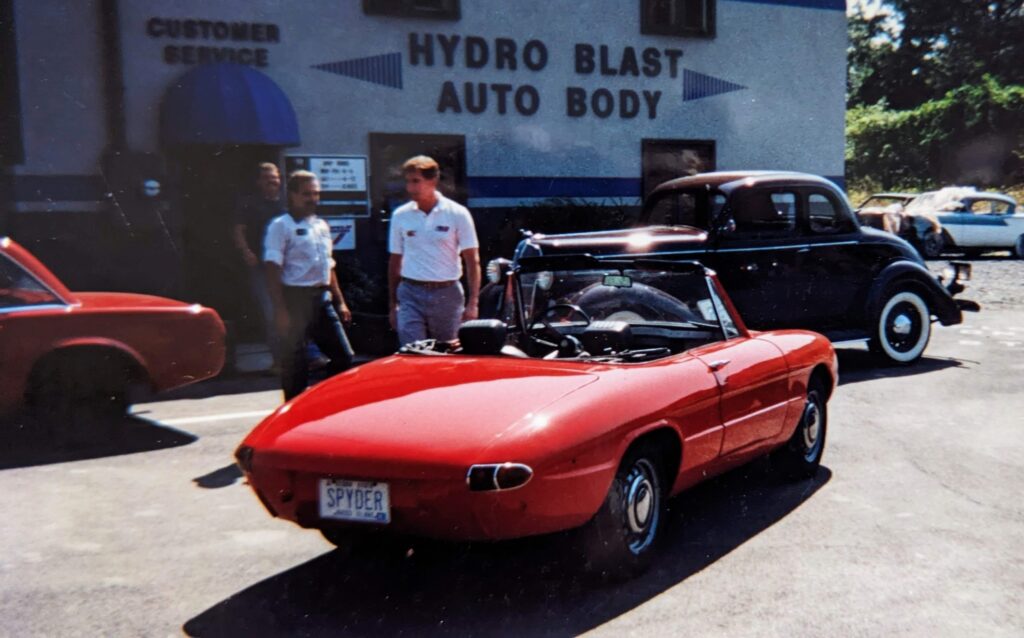
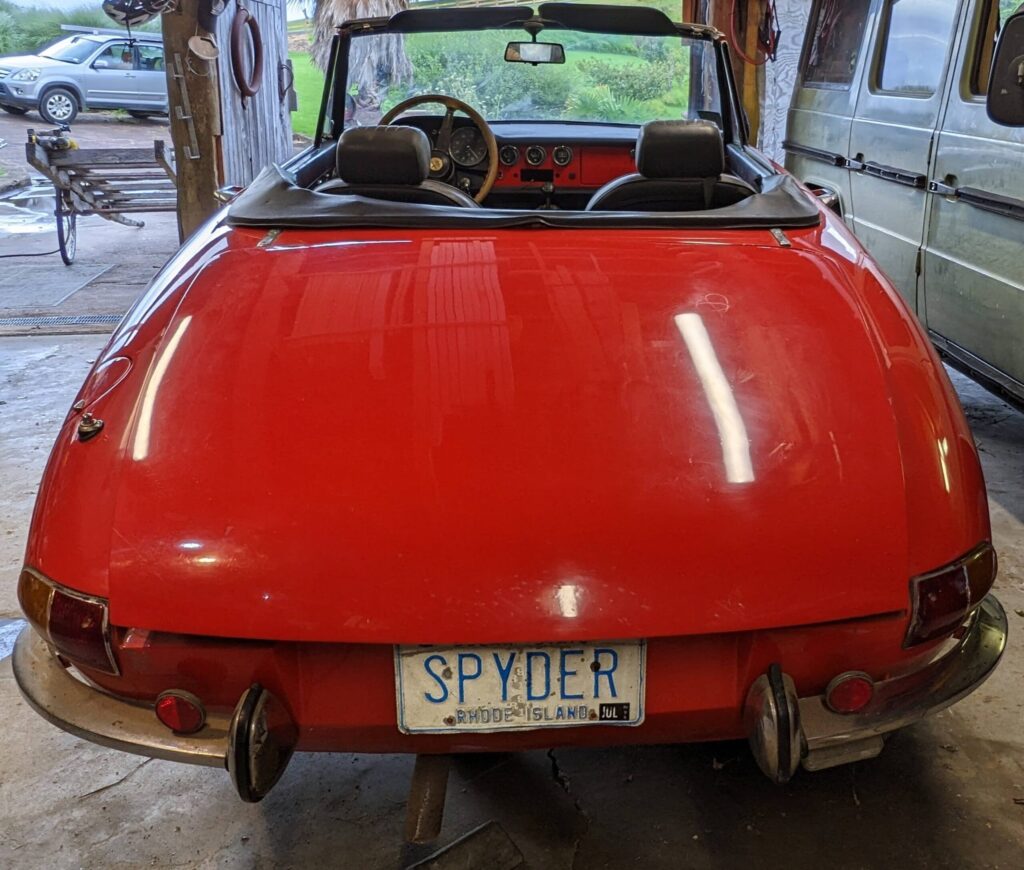
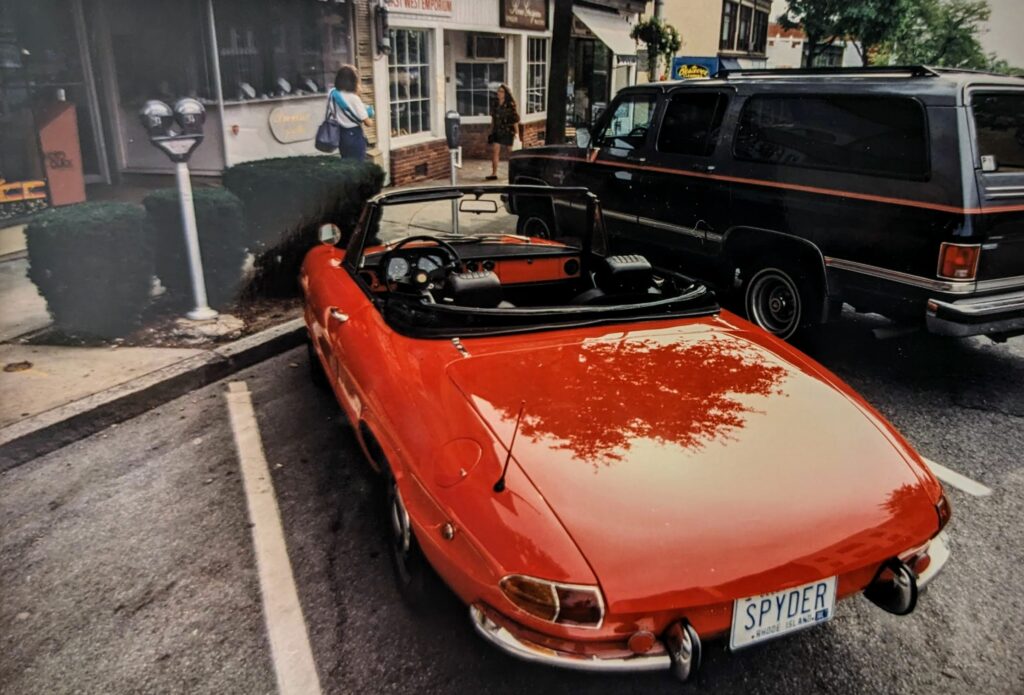
When I bought it, the Spider had 75,900 miles on the odometer with all prior registrations in Massachusetts, I registered it south of the border in Rhode Island and put the custom plate SPYDER on it. With a little attention it ran great and was used exclusively used as a summer and early autumn (leaf season) car. The top was never up, never driven in rain. Stored in a carcoon bag in the barn in Jamestown Rhode Island during the winter and spring. An island car for fun, I occasionally drove to Lime Rock race track for club track days. Reliable enough to drive home afterwards.
1995
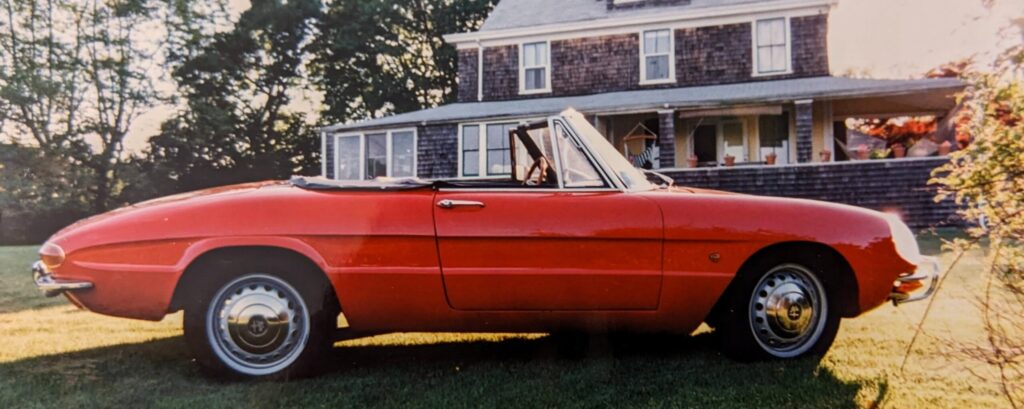
1995: As my business prospered, I started putting money into the body and mechanicals, new paint (from purple haze to red), Wes Ingram rebuild of the Spica fuel injection matched to 1/4 race cams he supplied, and the usual things, like brakes and tyres. I made a practice of going to the top Alfa mechanic in the region, asking what typically goes wrong on the 105/115 series and then replace those bits all at once. I’ve done this with every Alfa I owned, and they all ran reliably for the next decade.
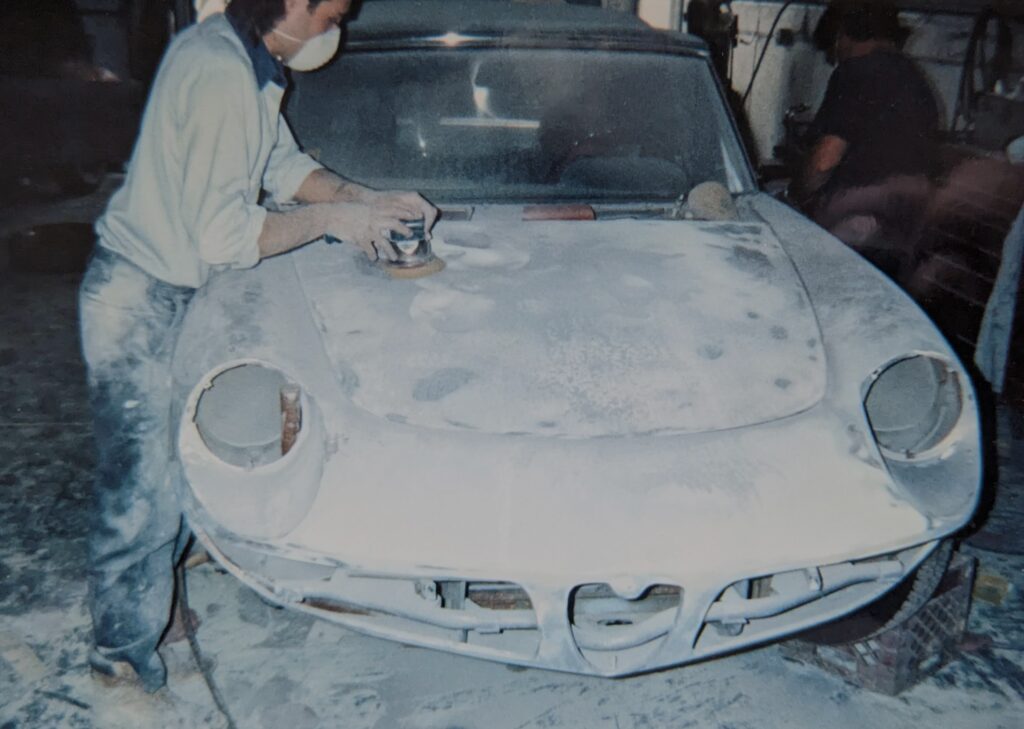
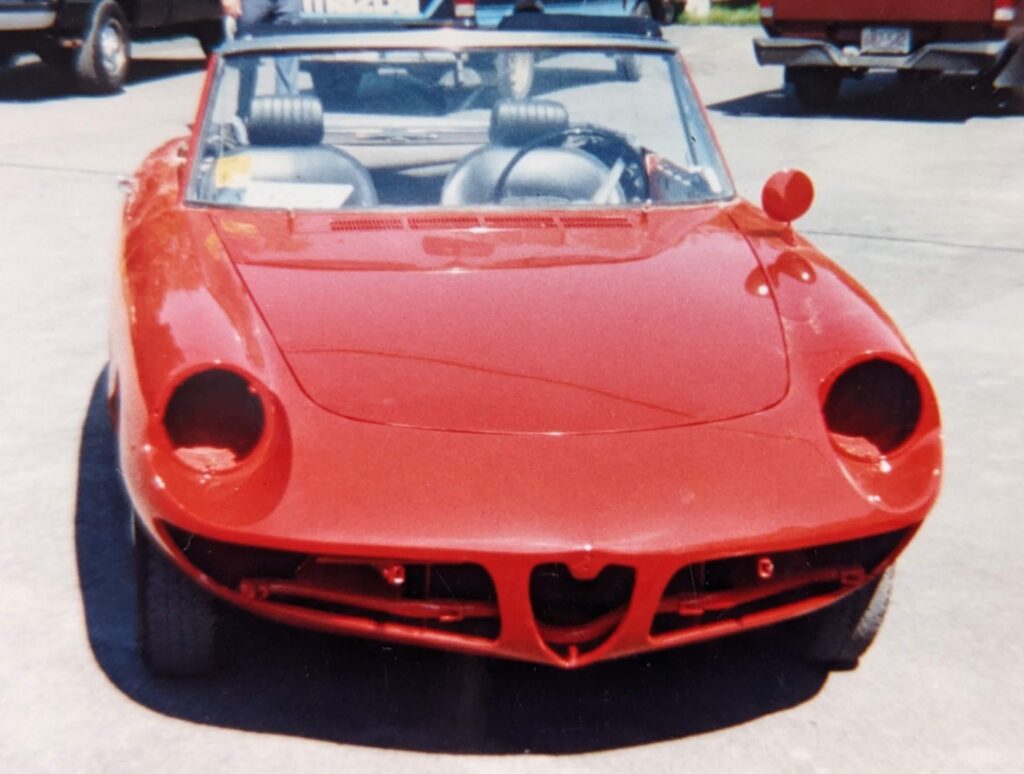
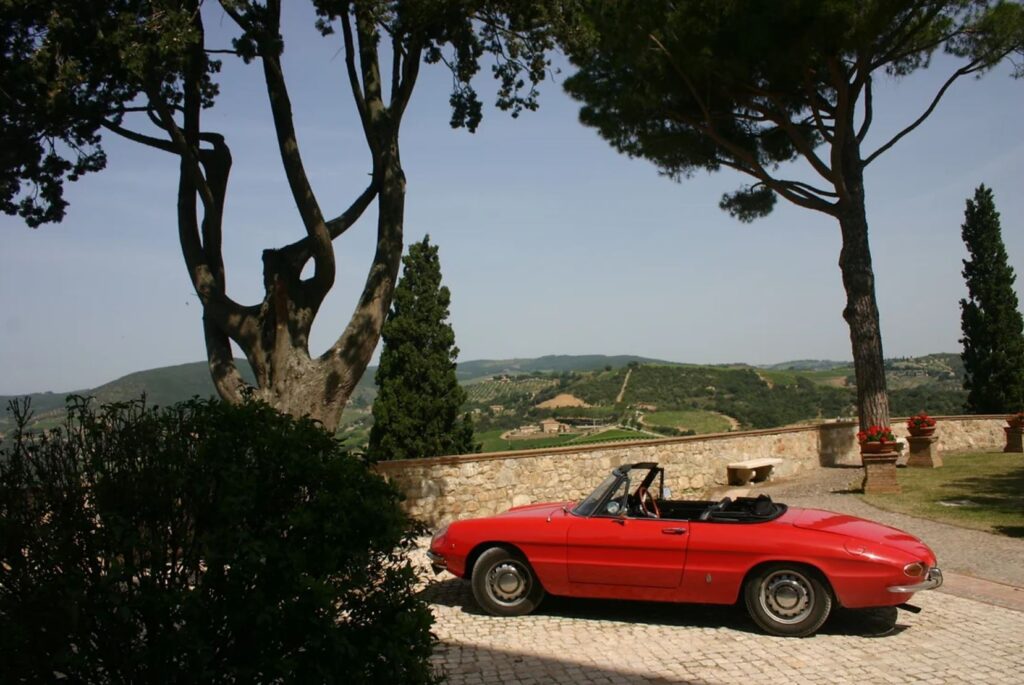
Hydro Blast Auto Body, the paint shop I used in Tiverton Rhode Island was renowned for excellent quality work at fair prices. But as this was for my own entertainment, and in 1995, a 105 Alfa was just another older sports car – not a collectible with value to justify a 95 point restoration, I did not do a bare metal job. Instead I removed all the the easy chrome bits, the body was sanded back, long-blocked and painted in a classic Alfa red. Since the rear clip was red originally, it was a coin toss between red or white, but aren’t all Italian cars supposed to be red?

Sand – guide-coat prime – sand – repeat for weeks on end until perfect

Last primer then long blocked to find high and low spots. Then prime again.

Ready for top coats

Next: enough bits put back on to not get a traffic stop driving home

All done, ready to go home. The bumpers can go on later

Greenwich Avenue
Summertime and the living is easy… Jamestown, Rhode Island
1997
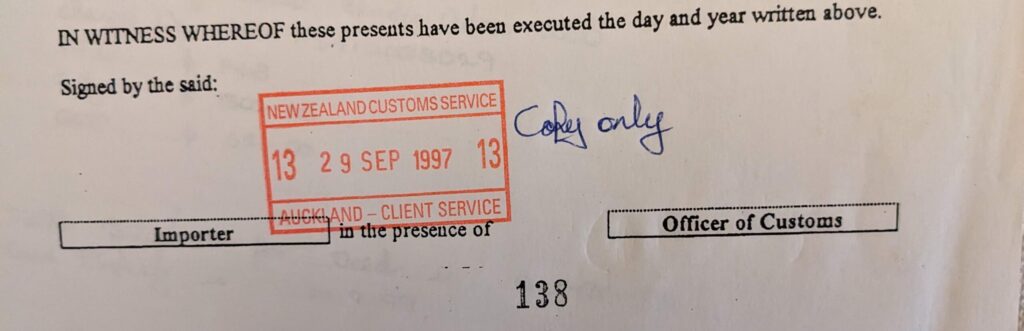
Packed in a container bound for NZ with 78,500 miles on the odometer, along with new parts easy to get in the US, but not in NZ. New seat upholstery, convertible top, Pirelli tyres, engine protector, etc. Shared the container with the 79 Alfa Spider, since sold
1998
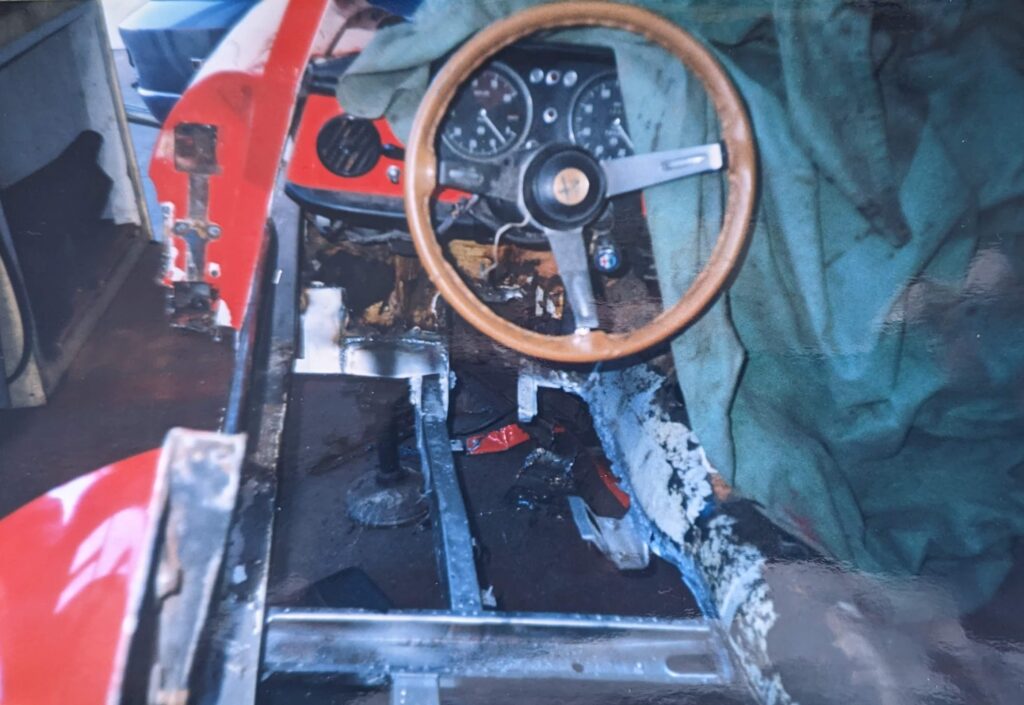
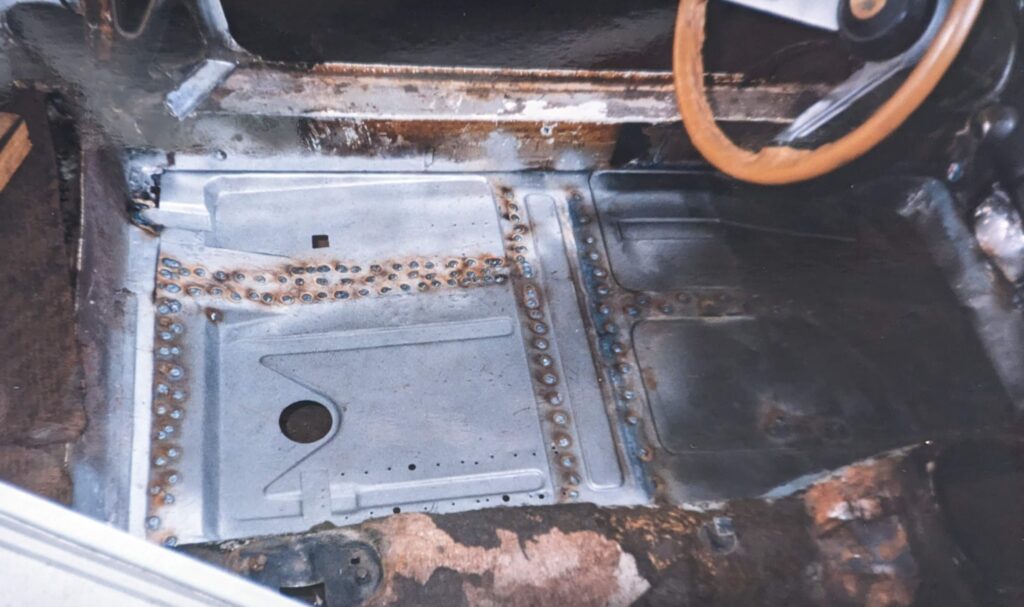
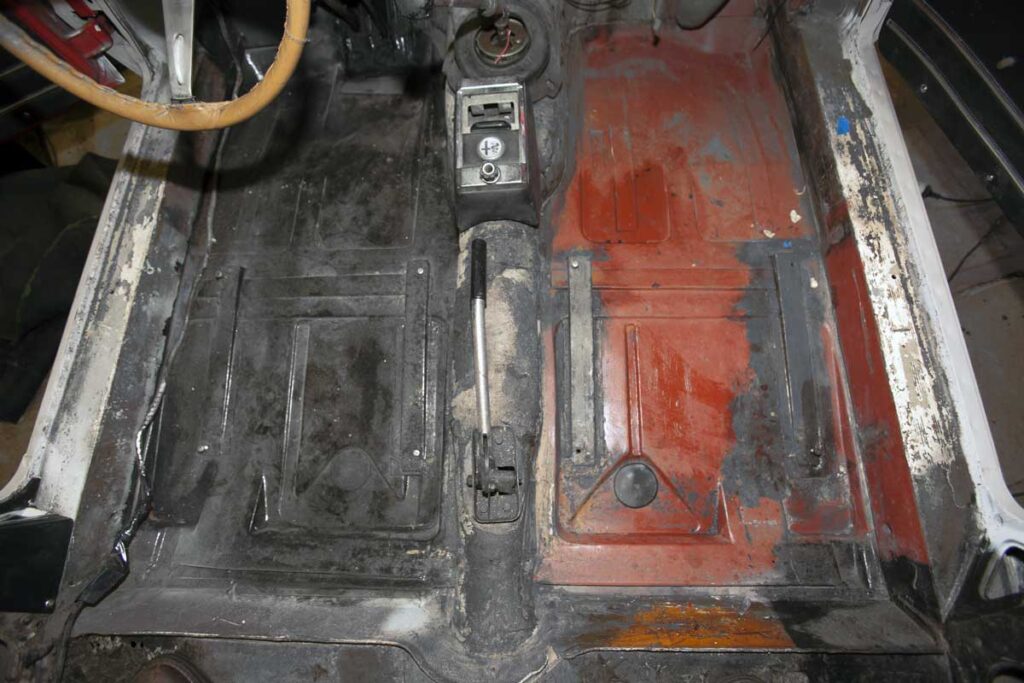
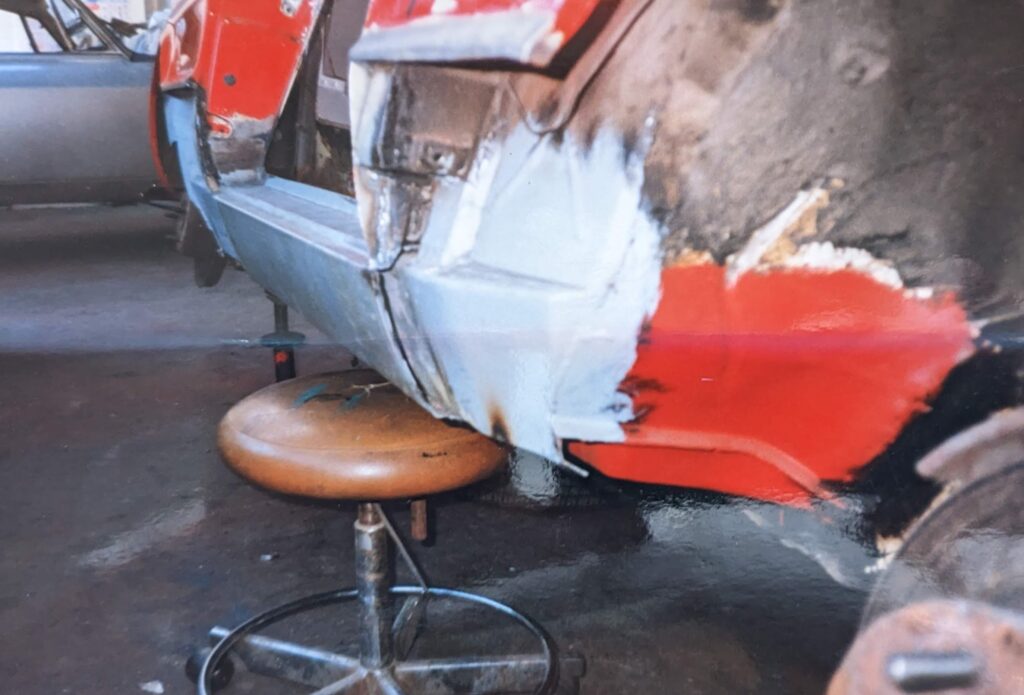
1998: While the paint looked lovely, the American standard for repairing typical Alfa rust in the floor was unlikely to pass NZ inspection, so on arrival I took the car off to Classique Automotive Restorations in Manukau, Auckland to have original Alan Bowden floor pressings installed, as well as new rockers and lower guards made. First class work.

Cut out Floor

Weld in Alan Bowden pressings that match original floor panels

Replace sills and guards
2000
Unfortunately, while Classique did an excellent job with the rust, they subsequently seemed more interested in monthly billings than putting the car back together. There was virtually no progress for a year – and the car suffered from spilled shop paint, dings from tools dropped on it and a broken side light lens.
While Classique was messing around, sleaze-bag NZ used car dealers were buying flood-damaged cars in Japan, importing them and selling them as good cars. Naturally, they lasted a few months before the electronics started to fail, corrosion showed up and it became a political stink. So the government changed the rules on first time imports, include VIN rule 3-4:
Entry certification 3-4: Threshold for requiring specialist repair certification: A vehicle must be referred to a specialist repair certifier if signs of repair, rust prevention, acid wash or under-sealing to any part of the vehicle structure are evident.
For a late-model car being sold to a consumer, this is a reasonable rule. For the collectible car industry it is an instant fail. What collectible car will not have undersealing or signs of repair? Worse, it became a license to print money with repair certifiers having a monopoly.

At the time, I had a 1972 Bristol 411 that got caught in the new certification process and it was a nightmare. Immediate fail (write off $500 inspection fee), then the certifier begins by demanding the car has all the protective coatings blasted off. The Bristol had just been the subject of a $50,000 restoration, and I was paying $1,000 to blast off the new undercoating. Then the certifier demanded the body shop (panel beater) start cutting holes in the chassis to inspect the steel inside. The estimate to tear apart and restore to prior condition, plus the certifier’s endless bills was over $10,000 for no improvement in the car, just regulations gone mad. But before much more was spent, a customer in the workshop lost control of her car – thought she was backing up, but gear was in drive, thought she was stepping on the brake, but floored the accelerator. The Bristol save the proprietor’s life, as he dove behind it. But that began a two-year battle with the insurance company who wanted to send it out to a quick-and-dirty repair shop for a hand-made, aluminium-bodied bespoke car that had just had a first-class restoration completed. In the end, they paid out, I had Alan Bowden do a correct repair, but when done I gave up. I sold it to a deep pocket collector who owned another one of my Bristols.
Realising the Alfa was about to face the same $10,000 fleeceing, having built a garage and workshop, I gave up on Classique and towed the Spider home. I figured eventually sanity would return to the collectible car industry, and rules made for recent JDM imports would not be applied to collectibles. As a side-note, they have not returned to sanity, so a few of us have started a petition to the MInister of Regulation – who built his own Lotus 7 Replica when he was a teen, and still drives it – to change the rules for collectibles. We’ve got the New Zealand Federation of Motor Clubs behind us, so there is hope. Otherwise, once running, I’ll ship it to the US to sell or to the UK to use driving the mountain passes and back roads of Europe (bucket list).

I slowly put the Spider back together, but was frustrated to find Classique lost the transmission mount, which as it happens ,was solely made for the US-spec 1969 year. That delayed a year until I travelled to the states to collect the right one in an Alfa a wrecking yard in the remote mountains of Western Connecticut who charged me 5X the price for the more common one – no complaint, he knew its value and I was happy to have it. BTW, Classique is long out of business, and no idea where the proprietor is, so I’m not telling tales about a small enterprise trying to stay afloat.
Classique also lost one of the inner panel behind the front tyre, so I will try to find a pattern and have that fabricated.
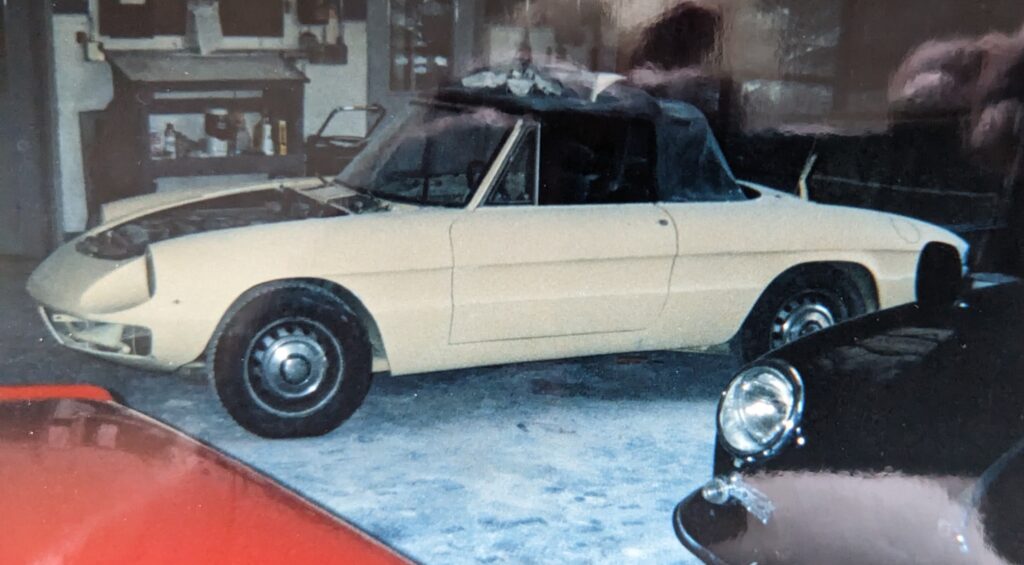
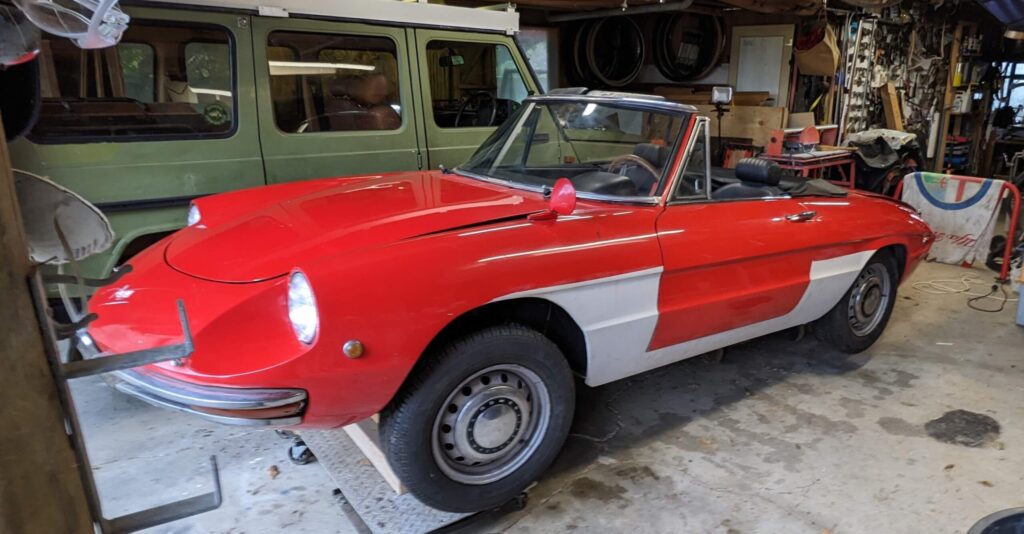
The parts of the body in primer as seen in the photo below, were necessary to restore originality, but it was sad to have a new paint job cut apart only two years later.
But as I had a running 1979 Alfa Spider that had been VIN’d (under the old rules) while the 69 was in restoration, there was no pressing need to get the 69 on the road, especially when the inspection process would cost more than an SLK.
Years turned into decades.
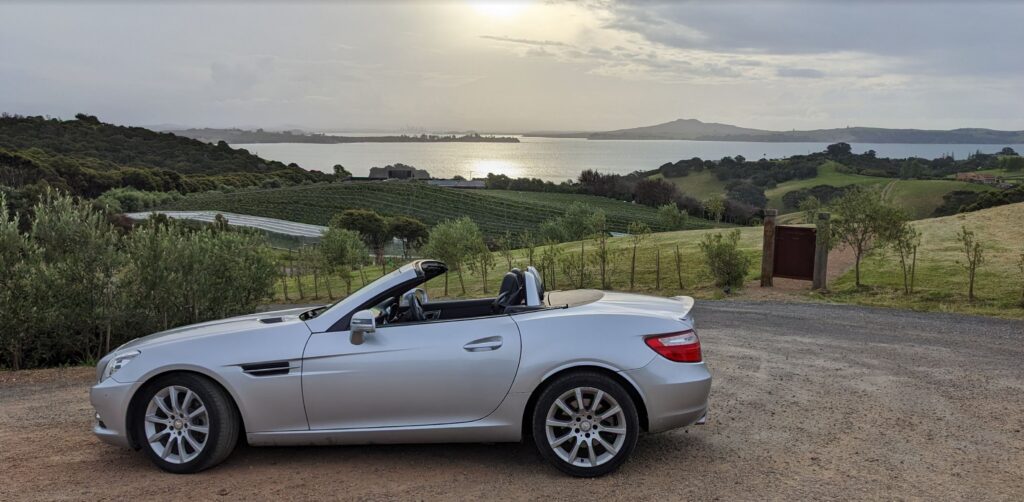
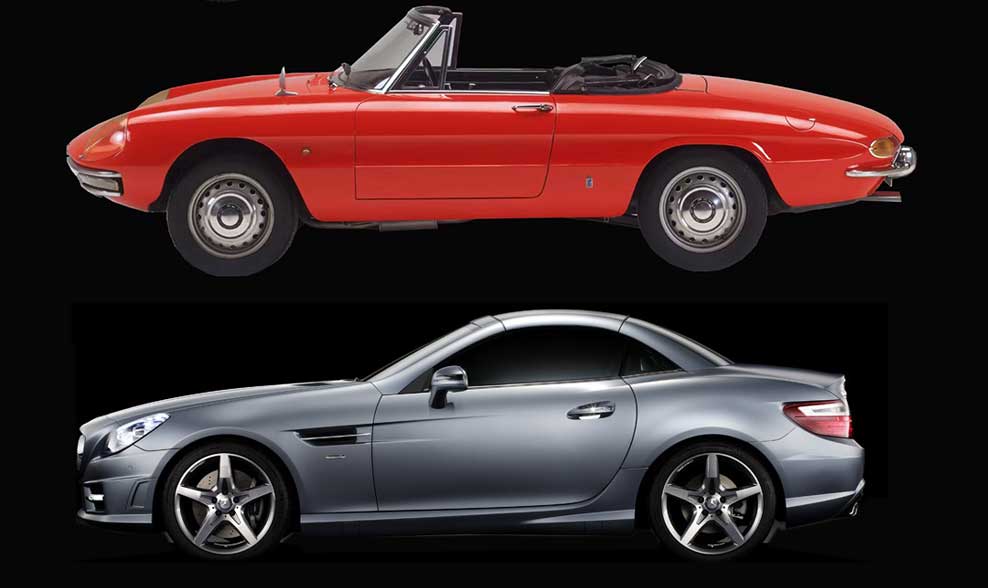
At one point my wife, a Mercedes gal, convinced me to buy an SLK (R170) for her. I was pleased to find the old 79 Alfa was now a collectible and sold for double what the SLK cost. More recently, we sold the 2001 SLK and replaced it with a R172 model.
2020
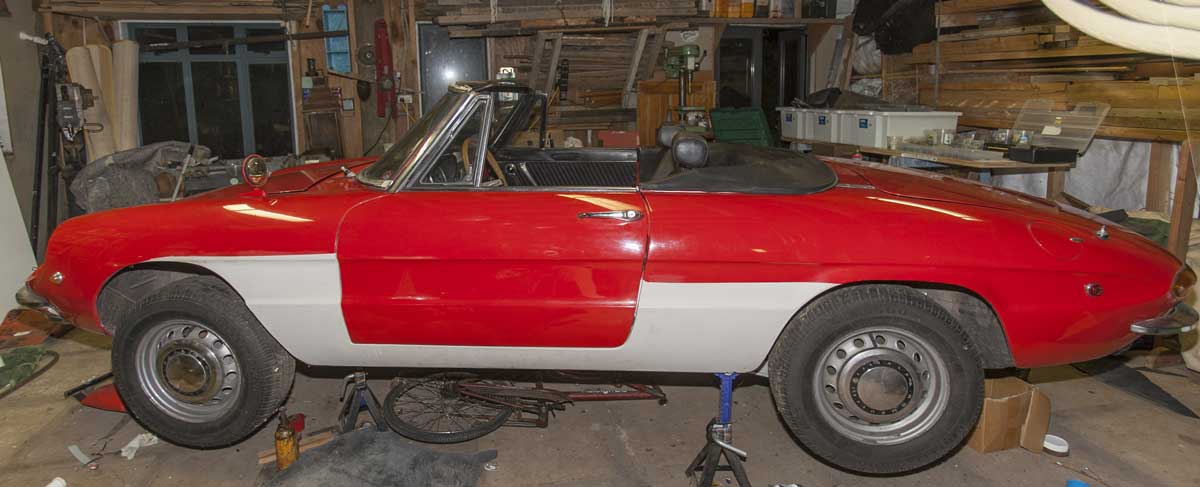
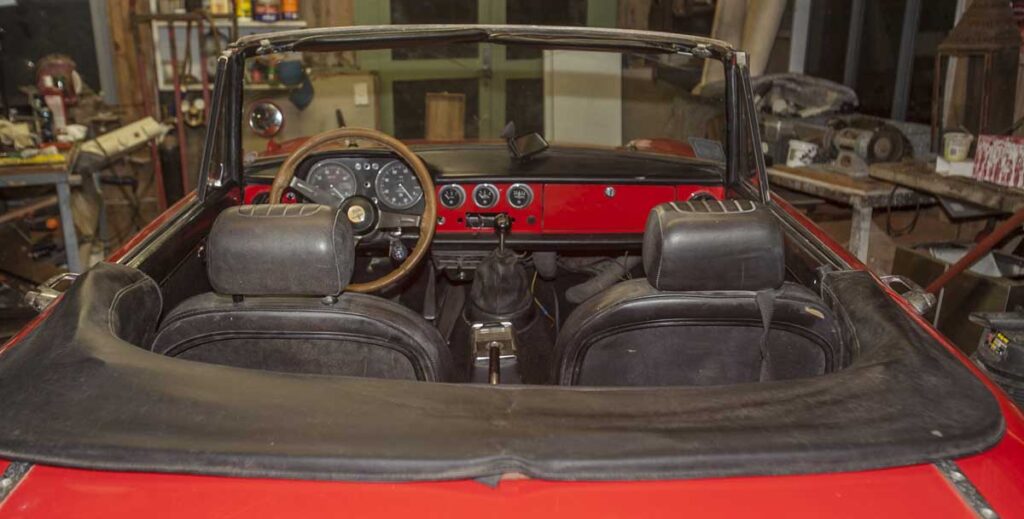
This photo shows is how it sat for years, on stands as I sifted through unmarked parts in fish bins and slowly reassembled the car.

2024
Still to do:
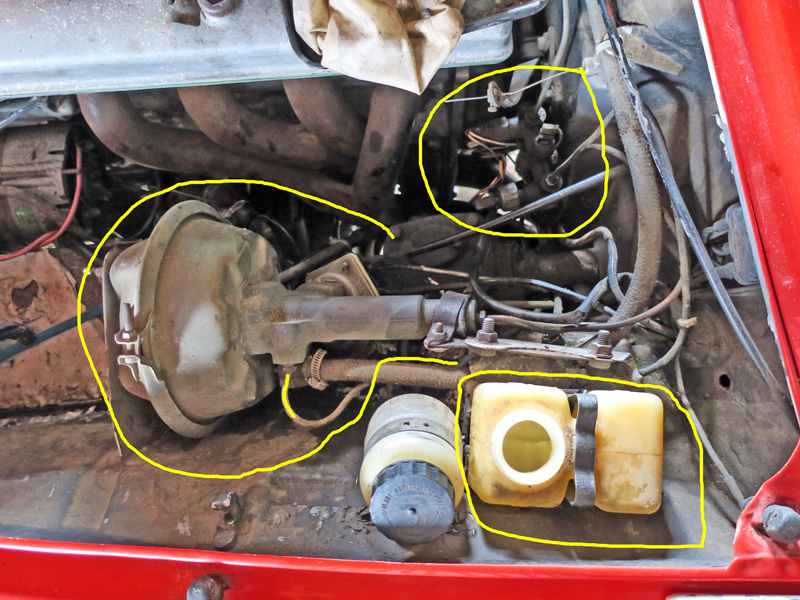
- Just got the brakes working – put in new calipers, rebuilt the master as well as the clutch slave, replaced the brake lines, but bleeding is different because it has the US dual brake system. Use speed-bleeders and 40 pounds of positive air pressure to force air from the system.
- Have a professional reinstall the front windscreen
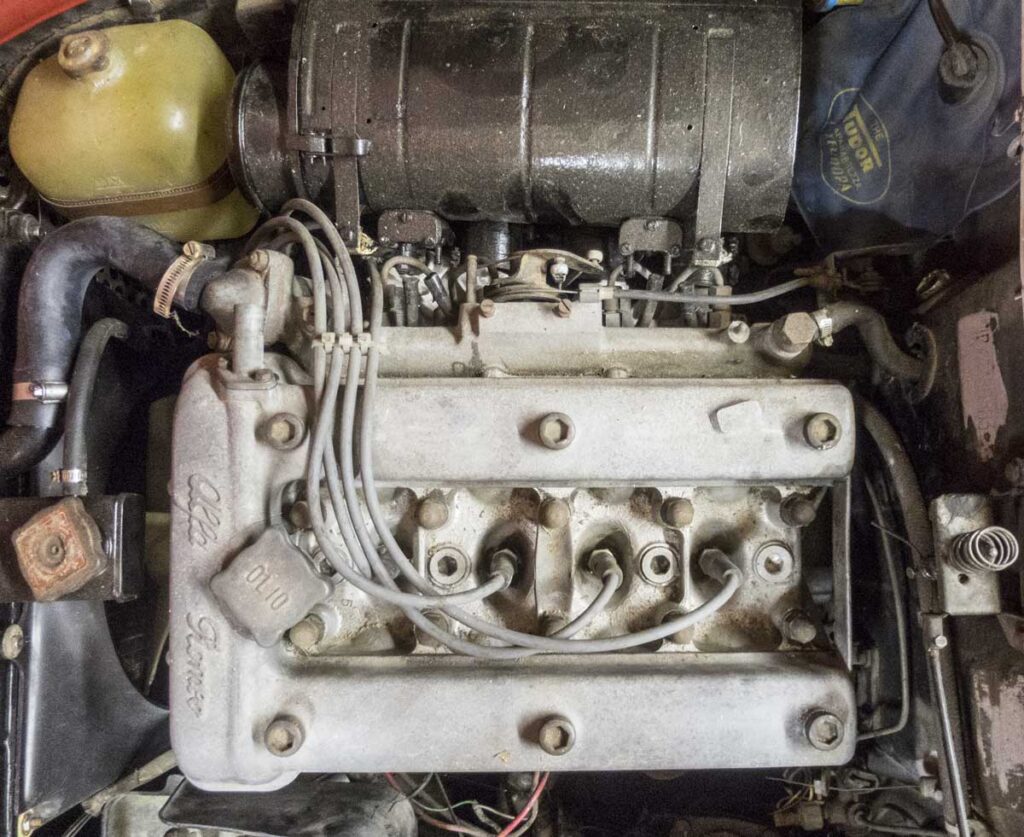
- All the stuff to start the engine for the first time in 25 years. Likely the clutch will be stuck. Need a new battery and anything else that suffered from not being driven for more than half its life
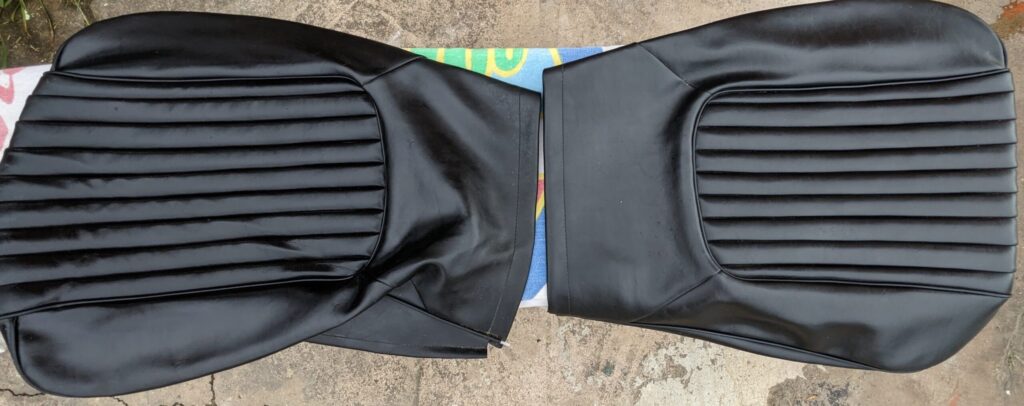
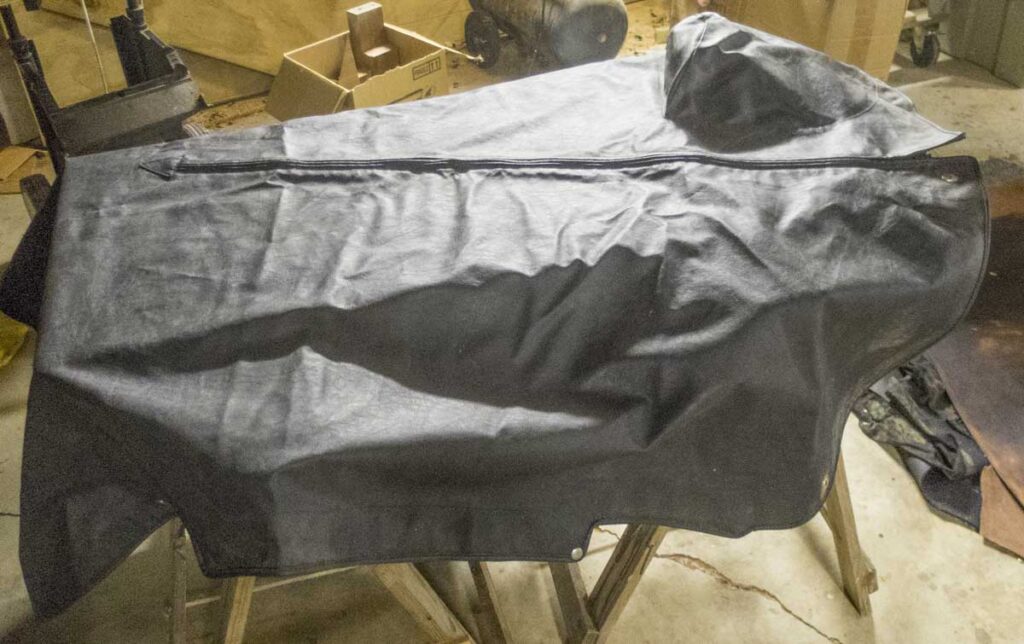
- Install the new seat upholstery and the new convertible roof – may use a professional to ensure it is done right
- Off to the panel beater. The paint was lovely, uncertain if it needs a full paint or partial. Of course a bare-metal is the premium way to go, but if it’s just for fun, I’ll probably just do a more modest refurbishment.
- Chrome and stainless bits will probably come off and go to a metal polisher. Need new Carello headlight protectors unless I can find a plastic restoration service that can polish them up.
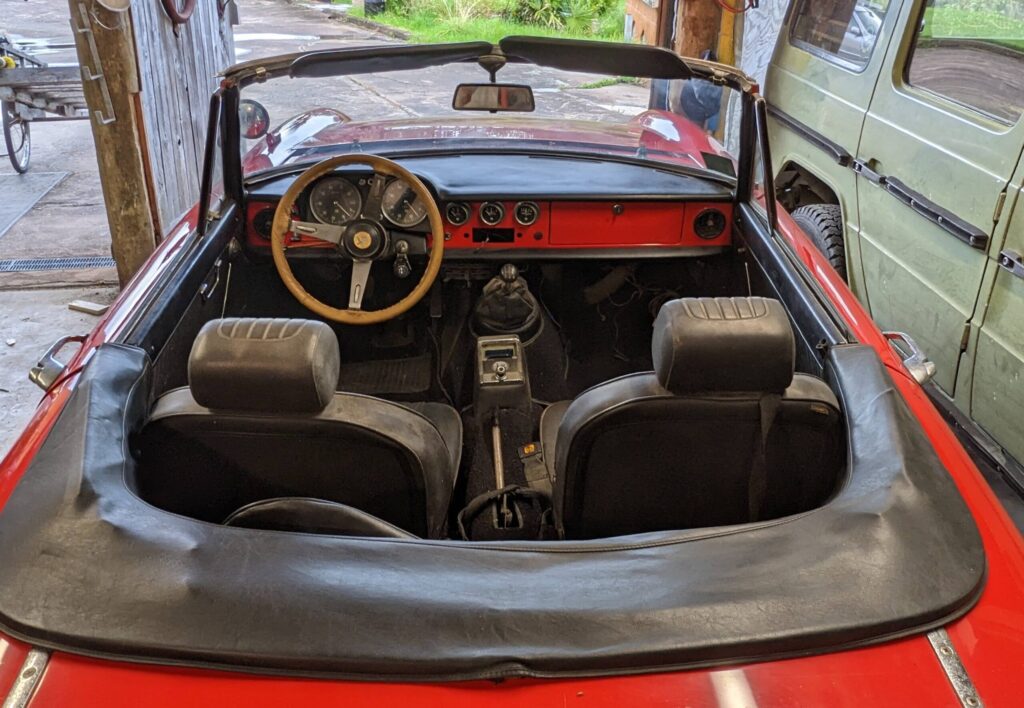
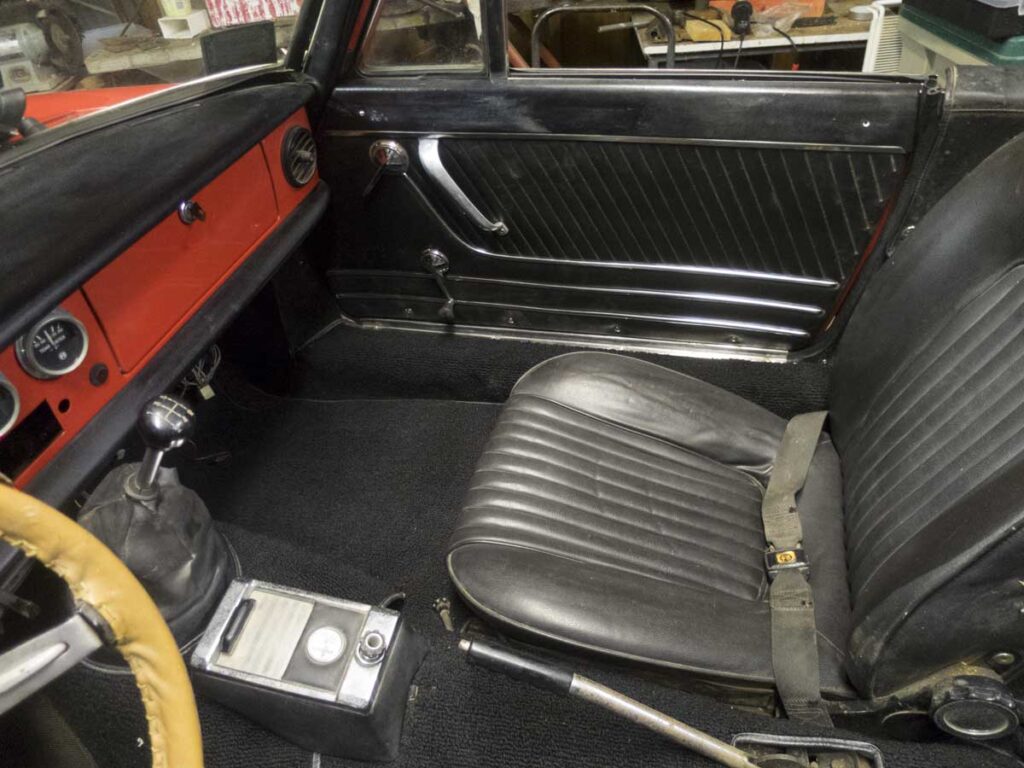
- Hard to decide if I install the new, but not original carpet, now that reproduction rubber floor covering is available (not cheap, but makes it look more original)
- Whatever VIN requires – NZ seat belts, probably an exemption on shoulder belts unless the roll bar is made permanent, high stop light.
- I’ll probably install the roll bar from my Lime Rock Race Track days and fit shoulder belts
- While the tyres are new from 1996, probably have ten miles on them, I would be surprised if they were deemed safe

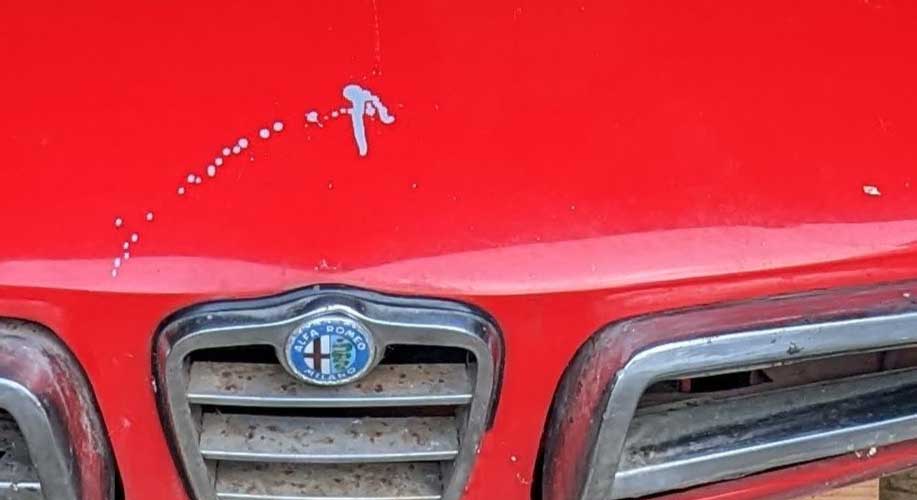
Annoying, the shop spilled primer on the front and left it there. The stainless steel bits could use a professional off-body polish. The windscreen is not affixed. The Carello plastic headlight covers need a good cut and polish or possibly just buy new ones.

Bit of a wrinkle by the driver side boot hinge. Someone must have closed the boot with a tool in the way.


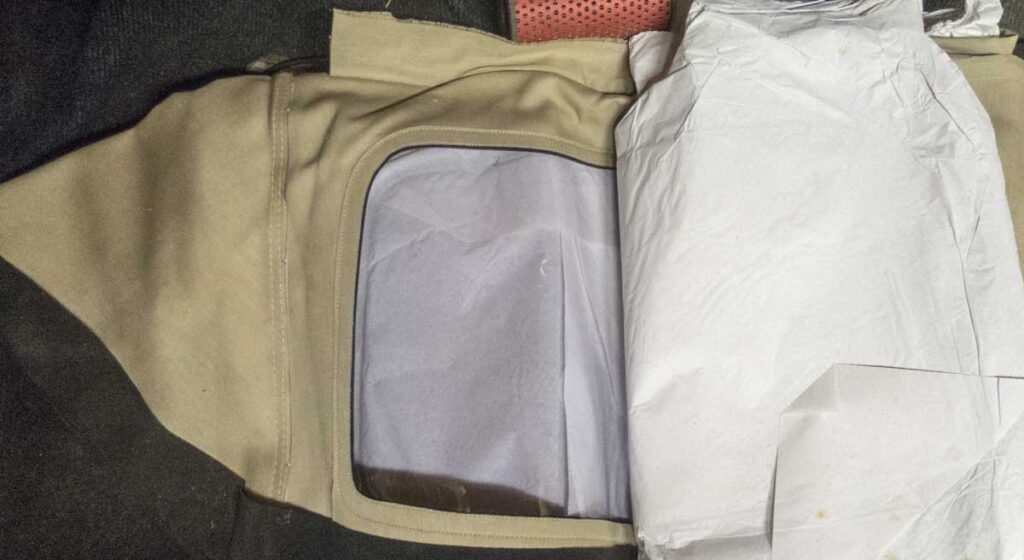
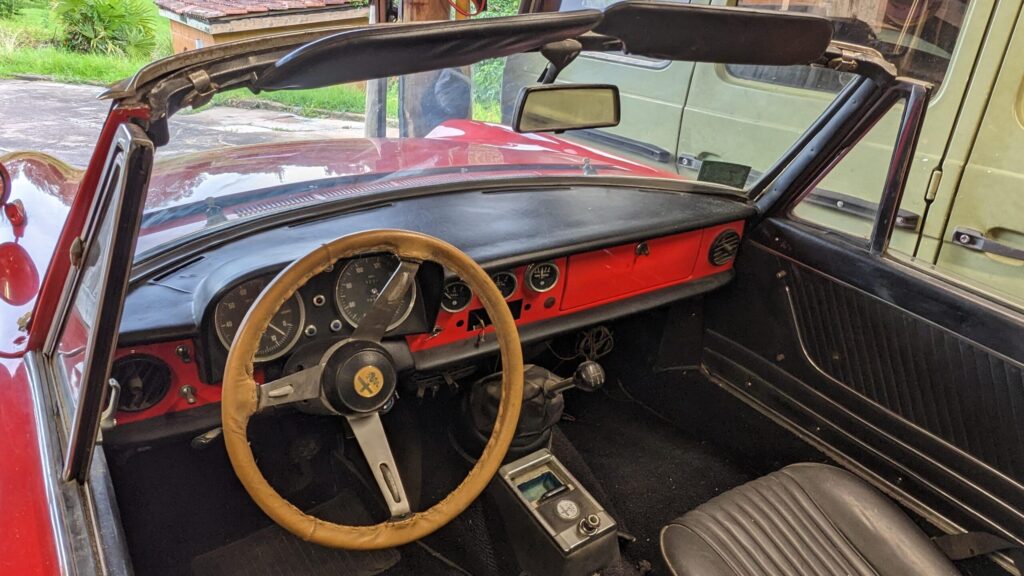
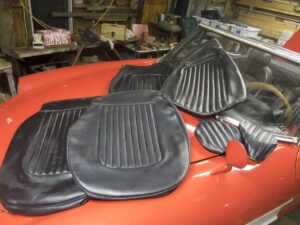
New upholstery ready for the seats – matches the original. I do have a later model wooden steering wheel, which I prefer, but the car is so original (except for the carpets), it’s a tough call

The carpets are not original. At the time, no one was remanufacturing the rubber floor covers.


And one day she will be restored to all her glory

And then to the bucket list: